Introducing: The Culture
There was a cultural adjustment. But what was the culture?
Non-Fungible Tokens (NFTs) are digital assets represented by a unique cryptographic identifier on a blockchain platform, ensuring scarcity and ownership. Progressing forward, the widespread recognition of Non-fungible tokens occurred during 2020–2021 bullrun, promising a revolution in the arts and collectibles industry. It achieved this to some extent by giving artists and creators total control over their work. However, its major appeal relied on the buzz and excitement, which can be attributed to the novelty of the concept and the staggering prices at which some were sold. For a more in-depth understanding, you can explore my detailed guide on the subject.
The process of transforming a digital or physical asset of value into an NFT is referred to as ‘minting.’ You can mint anything ranging from PFPs to graphic novels, art, memes, music, podcasts, games, stickers, comics, and more. However, this process is generally expensive, as exemplified by the chart below, which represents the total amount of NFTs minted on the Ethereum blockchain during the first six months of 2022. The cost amounted to a whopping 963,227 ETH, approximately $2.7 billion, for NFT minting during this period.

Stuff like that, combined with factors such as rarity and the prices at which most of these NFTs were sold, makes it easy for NFTs to be associated with words like ‘expensive’ and allegedly ‘worth millions.’ Hence, a culture was being propagated, signifying a certain level of exclusivity and financial significance attached to NFTs. However, the cost of minting and distributing NFTs is not the only factor associated with this culture. In fact, the next factor explains why minting is generally expensive.
NFTs are stored on digital ledgers built on a blockchain. This digital ledger is made up of blocks, and like all blocks, there is finite space within. NFTs are unique digital assets, and each NFT typically has associated metadata. Metadata includes information about the asset, such as its title, creator, and other associated attributes. In the case of traditional NFTs, this metadata is often stored directly on the blockchain.
Storing metadata directly on the blockchain can result in higher utilization of block space. As the number of NFTs grows, the overall size of the blockchain expands, requiring more storage capacity. Due to restricted block sizes, time constraints, and finite space in each block, a higher volume of transactions, including those for minting NFTs, vies for inclusion in a block. This heightened competition may lead to congestion, delays, and an upswing in transaction fees. Hence, minting becomes expensive.
Enter: The Cultural Adjustment
Compressed NFTs
Compressed NFTs, or cNFTs as they’re called, are NFTs that are stored using the Merkle tree structure, where one NFT is the Merkle root and is kept on-chain, while the Merkle leaves — representing individual NFTs — on the tree are stored off-chain and managed by RPC (Remote Procedure Call) providers. More technical details here, or check out these two videos. This solution was first introduced at Solana Hacker House Korea around the 4th of August 2022 and was quoted to dramatically reduce the cost of on-chain storage for NFTs. Compressed NFTs (cNFTs) were pioneered under the Solana blockchain by Solana Labs’ Merkle tree program (Gummyroll), and advancing through the Metaplex Foundation’s compressed NFTs program (Bubblegum).

cNFTs on Solana effectively addressing the issues of cost and block space associated with traditional NFTs is achieved through the innovative use of state compression technology, which optimizes the storage of NFT data on the blockchain. By compressing the data, Solana significantly reduces the cost of minting, making it more affordable for users. Additionally, the streamlined storage minimizes the impact on block space, allowing for more efficient and scalable NFT transactions compared to blockchains like Ethereum.
To put this into perspective, minting a million compressed NFTs on the Solana blockchain costs about $110 or 5 SOL, (though it might be a bit higher due to the current price of $SOL). Therefore, the cost per cNFT is $0.00011 or 0.000005 SOL. In contrast, on the Ethereum blockchain, minting a single NFT can cost anywhere from $70 to $100 at a minimum. This means that theoretically, to mint a million NFTs on Ethereum, the cost could range from $70 million to $100 million. Furthermore, for the million compressed NFTs, only a fraction of them will be stored on-chain, while all million traditional NFTs will be stored on-chain.
Its Role In Fostering Economic Viability In Web3
An innovative wildfire
cNFTs not only achieved sustainable financial viability but also subsequently paved the way for economic viability in the digital arts and collectibles industry. Let me explain:
Financial viability refers to whether a company can make enough money to cover its everyday costs and pay back its debts. The cost-efficient way of minting cNFTs ensures this. However, economic viability describes a project that, when you consider all the costs and benefits, makes a positive economic impact on society. The scalability of cNFTs also ensures this, making a significant contribution to economic viability in the digital arts and collectibles industry.
The cost-efficient and scalable nature of cNFTs lowered the barrier of entry, leading to the development of new products, utilities, and the emergence of new communities on the Solana blockchain. If that is the case, one can agree that this presents a phenomenon: The state of cNFT adoption on Solana. To get a glimpse of what this looks like, let us consider the products, utilities, and communities emerging on the Solana blockchain.
The State Of cNFT Adoption On Solana.
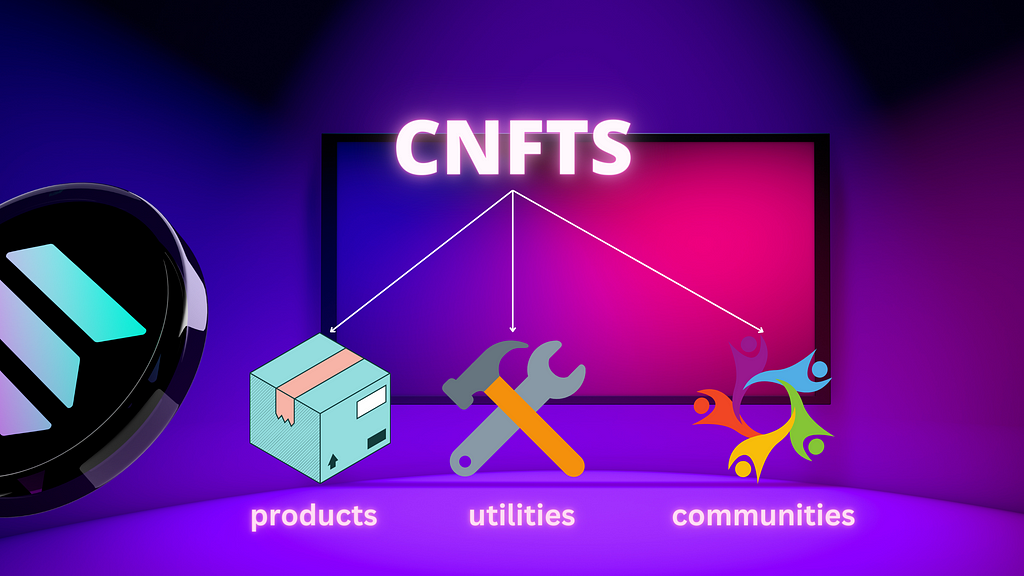
Having highlighted the three possible elements contributing to the state of cNFT adoption in Solana, let’s delve into the initial one.
Products:
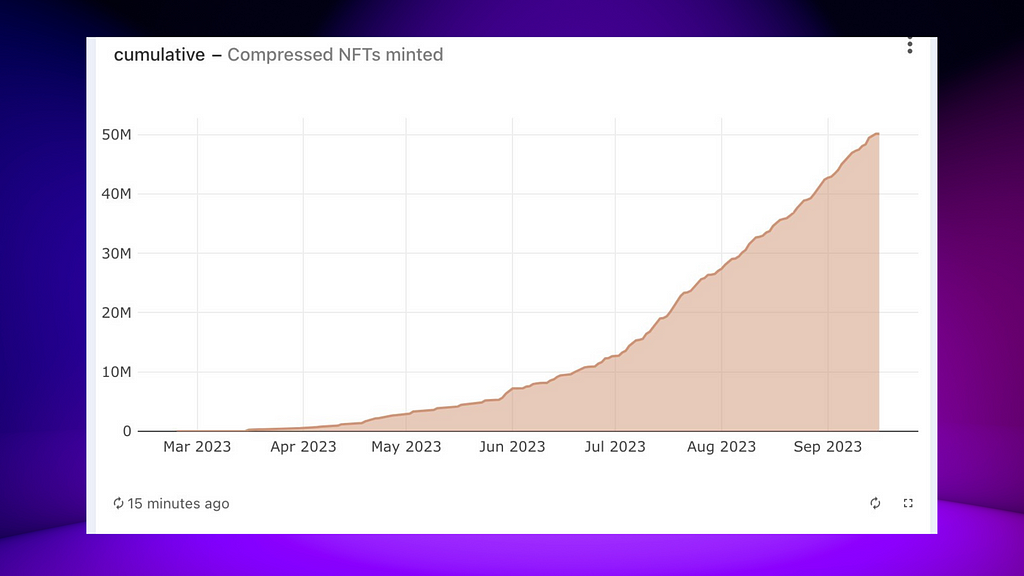
- DRiP: DRiP is a social platform where you can receive free cNFTs from your favorite creators just by subscribing to them and engaging in fun activities and challenges. Despite the fact that creators give out collectibles for free, they still get incentivized through the DRiP Creator Fund. DRiP is to cNFTs what a catalyst is to a reaction. It has played a pivotal role in popularizing cNFTs, akin to how cryptocurrency catapulted blockchain into popularity. They are responsible for over 40 million out of the 50 million compressed NFTs minted from March 2023 to September 2023.
- Solarplex: Solarplex is a SocialFi platform and a content sharing platform built for the Solana blockchain. Users can find up-to-date information about creators, projects, communities, and ecosystem developments in the form of posts or threads. cNFTs are used for loyalty programs by creators and embedded arts for posts.
- Dialect: Dialect is a web3 messaging app powered by Solana. It enables creators to interact with their audience personally by trading collectibles, making purchases, playing games and sharing stickers in the form of cNFTs, all through a chat interface. Users can also subscribe to their favorite creators to receive updates and projects delivered to the channel of their choice (email, SMS, Telegram, and/or direct-to-wallet).
- Tensor: Tensor is the forerunner NFT marketplace of the Solana blockchain. They were the first to mint 10,000 cNFT collectibles and were responsible for all cNFT trades until Magic Eden came into the picture. Currently, they have the most liquidity (listings and bids) and a strong community (Tensorians).
- Helium: Helium is a decentralized wireless infrastructure that started out with its own layer 1 blockchain but later upgraded to the Solana blockchain. It is a perfect demonstration of the real-world use case of cNFTs, as it now has a network of hotspots minted as cNFTs.
Utilities:
- Underdog Protocol: Underdog Protocol, the grand winner of Solana Grizzlython, is a Solana-based API tool that allows anyone to conveniently integrate cNFTs into their projects, platform, or business with or without coding skills and experience. Projects like Solana Genesis Token were launched with Underdog Protocol.
- TipLink: TipLink is a tool used to send and receive cryptocurrency or NFTs via links. This makes the process easier for non-crypto natives, making it an effective way of onboarding new users to crypto. TipLink Compressed is a tool specifically made to distribute cNFTs at scale, even to users without a wallet, using different mediums like email, Twitter, QR codes, etc. Three months ago, a superteam user earned first place in a developer bounty after creating a simple codebase to mint cNFTs using TipLink for distribution.
- SolTimes (Solana Burning Man): SolTimes is a tool that incentivizes you for burning your cNFTs and participating in daily quests. It was launched around September 2023, and since then, over 55 thousand cNFTs have been burned, with over 1000 wallets interacting with the tool.
- PubKey: PubKey, the first prize winner in the DAOs and Network States Track of the just-concluded Hyperdrive Hackathon, is a Discord role identity verifier that utilizes cNFTs as the verification key. Other features include its ability to grant users access to servers based on cNFTs trait combos and its support for Discord-linked roles. However, PubKey is in its early stage of development.
- SOAP: Solana Own Attendance Proof (SOAP) is a Solana-based Proof Of Attendance Application (POAP) that enables event ticketing and distribution using compressed NFTs. It was first run as an experiment in the Hacker House Barcelona, where it was used as proof of attendance, and subsequently in Summer Camp Berlin and the just-concluded Breakpoint 2023.
Communities:
Communities that have emerged around cNFTs on Solana embody a genuine commitment to being diverse and inclusive. The technology that underlies cNFTs significantly influences the nature of these communities. In contrast to traditional NFTs, cNFTs break down entry barriers, especially the exclusivity tied to substantial financial investments. This characteristic transforms cNFT communities into dynamic ecosystems that scale without restrictions, resembling an innovative wildfire that allows experimentation from individuals across all walks of life.
The phenomenon of cNFTs promotes a unique form of inclusivity, allowing individuals with smaller follower counts, such as fewer than 2000, to actively engage and enjoy the advantages of cNFTs, just as a corporation with networks around the world would. This stands in clear contrast to traditional NFTs, which have often been linked to an exclusive group, including elites, celebrities, and industry whales. The democratizing nature of cNFTs ensures that both individual users and mega companies with a global reach can engage on an equal footing within these artistic communities.
Numbers Never Lie
Quantifying The State Of Adoption
We have considered the three potential elements that contribute to the state of cNFTs on Solana; now, let’s find out if its current state is a net positive or net negative.
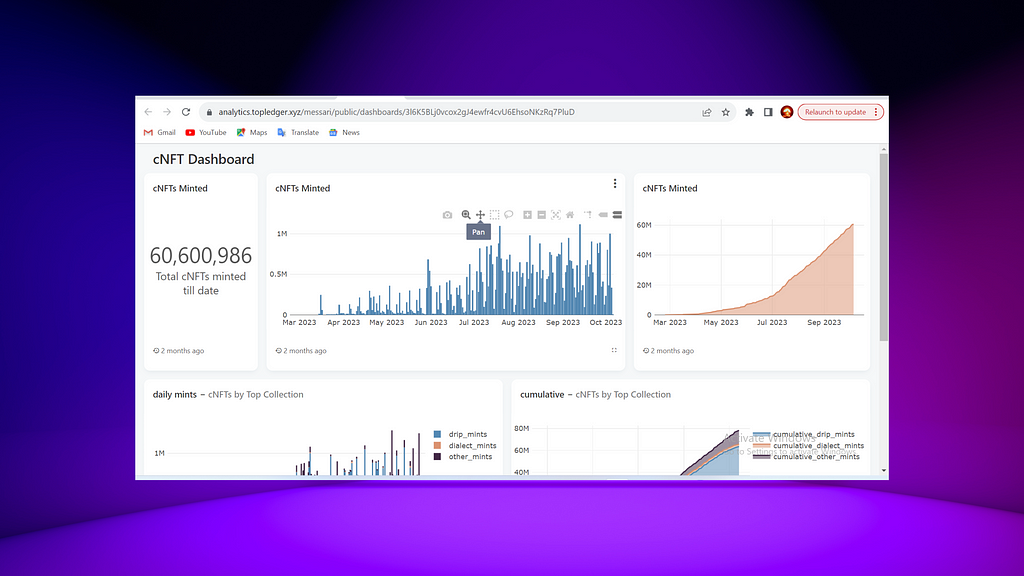
From the screenshot above, it is evident that over 60 million cNFTs were minted during the eight-month period from March 2023 to October 2023. As discussed earlier in this article, the estimated cost for minting one million cNFTs is $110 or 5 SOL. Therefore, the theoretical cost of minting over 60 million cNFTs in this eight-month period would be $6,600 or 300 SOL. Compared to traditional NFTs, it would have cost a staggering $4.2 billion to $6 billion, reflecting a price difference of over $5 billion when considering the upper range of the estimated cost of minting traditional NFTs on Ethereum.
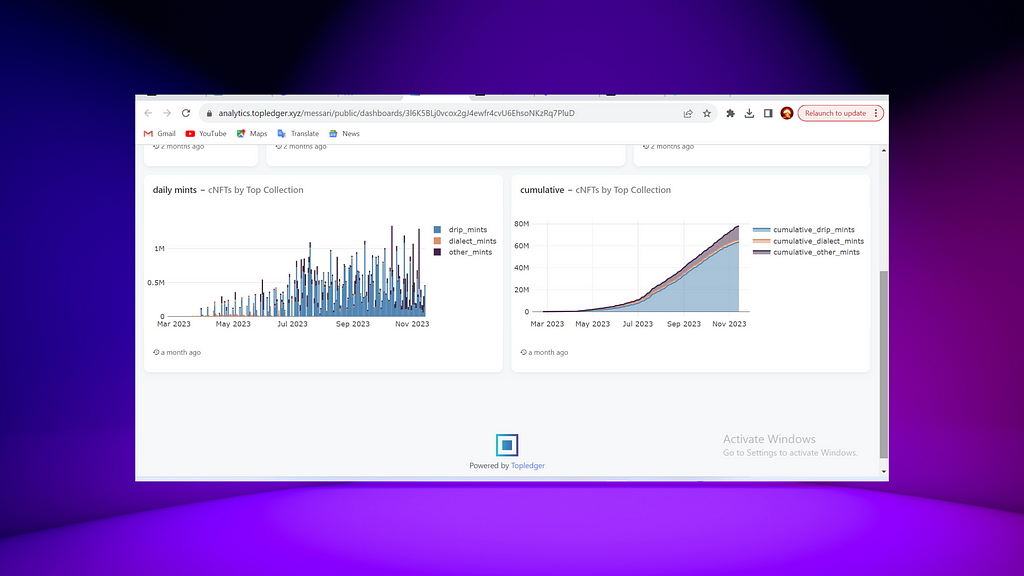
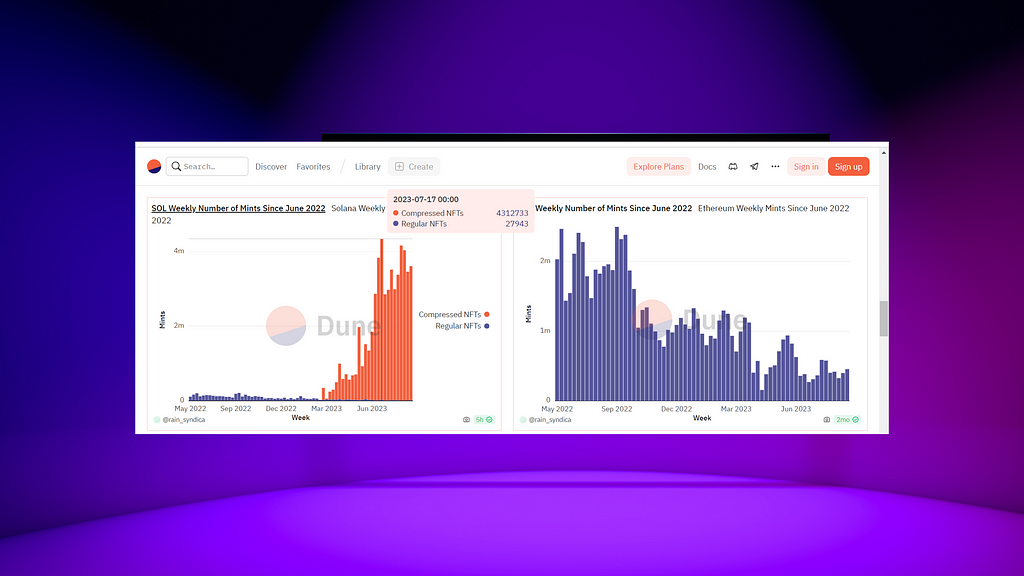
By November 2023, the total number of minted cNFTs had increased to 80 million. It's important to note that only 32.92 million traditional NFTs have been minted since the onset of NFTs on Solana. Out of the 80 million cNFTs minted, DRiP was responsible for minting 79.44% of all cNFTs from March 2023 to November 2023, accounting for a total of 63,550,894 cNFT mints. Furthermore, as of July 17, 2023, approximately 3–4 million cNFTs were minted weekly, in stark contrast to a mere 27,000 traditional NFTs during the same period. The screenshot below illustrates this metric provided by Dune.
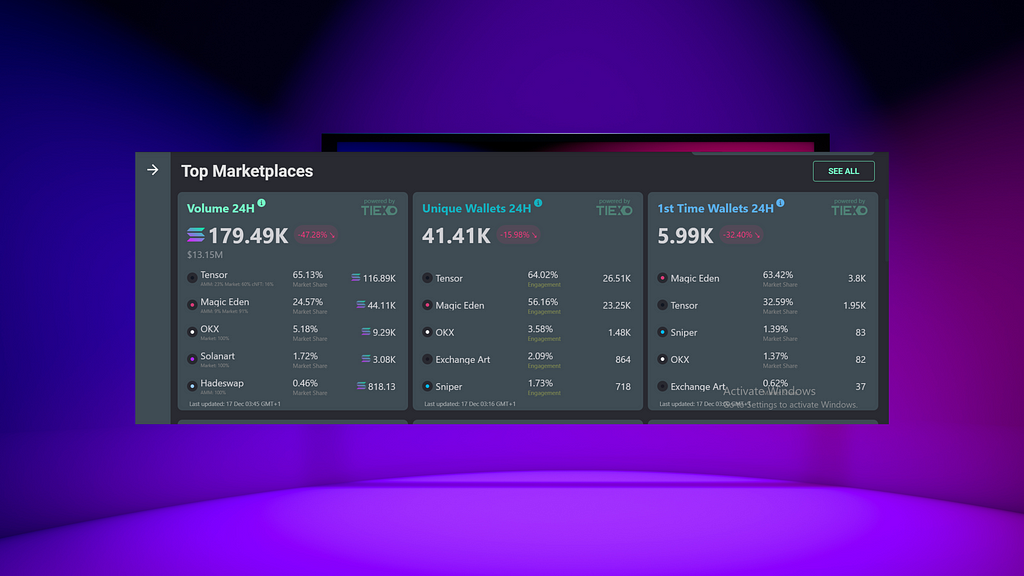
Tensor, the leading NFT platform on the Solana blockchain, holds a significant portion (64.81%) of the NFT market specifically on the Solana blockchain. Sixteen percent of it is contributed by cNFTs.
So is the current state of cNFTs on Solana a net positive or a net negative?
I think we can both agree on the former.
Security Concerns, Is cNFTs Safe?
cNFTs Enabling Crypto Hacks
Recently, hackers have been exploiting the ease of minting cNFTs, adding to the list of vulnerabilities present in the web3 space. In this type of attack, hackers create cNFTs, embedding malicious or phishing links, and then distribute them widely to different wallets. These deceptive cNFTs often claim to be winning entries for cash prizes and vouchers. The main objective of this hack is to lure unsuspecting users into clicking on these NFTs, hoping to claim the promised rewards.
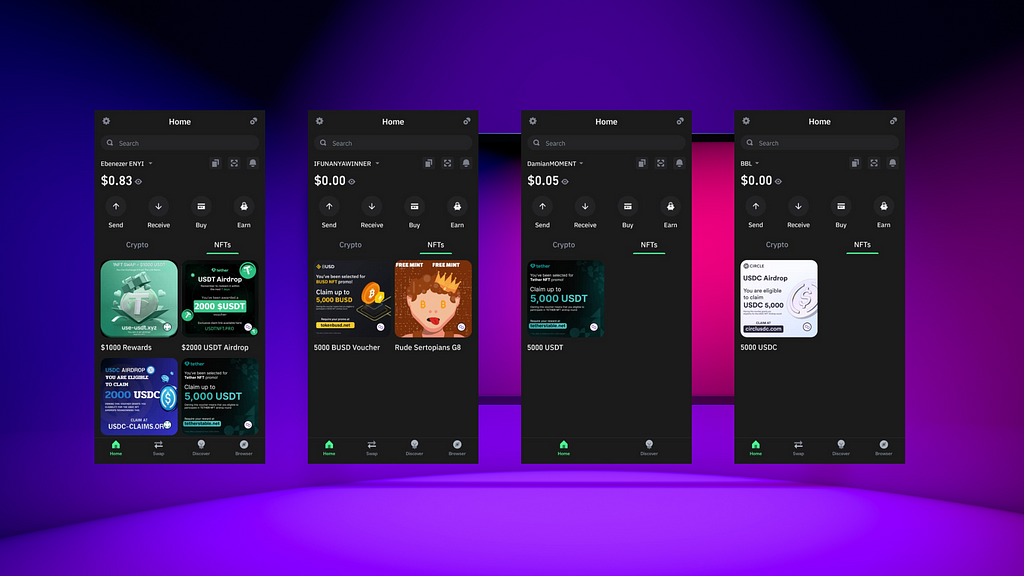
Unfortunately, this action grants access to the hacker or a malicious program, which then drains assets from the compromised wallet. At present, there is no permanent solution available to prevent such attacks. Users are strongly advised to refrain from clicking on random NFTs, especially those falsely promising cash prizes. In response to this threat, wallets like Solflare have temporarily disabled notifications for receiving all NFTs and are actively working on a long-term solution.
To potentially curb this threat, I suggest implementing a smart contract-based verification system for cNFTs that will allow users verify the authenticity of cNFTs before interacting with them. This system could involve cryptographic signatures or other secure methods to validate the legitimacy of the cNFT. Alternatively, developing a feature that allows users to verify the content of cNFTs dynamically by scanning for malicious links or content in real-time and providing warnings to users if any suspicious elements are detected might be effective.
Conclusion
The Impact Of cNFTs On Solana Growth And Adoption
Taking into account all the data, metrics, and speculations I’ve compiled throughout my research into the state of compressed NFTs on the Solana blockchain, the primary and defining outcome is that the impact will initially affect the economic viability of the Solana blockchain. Subsequently, it will extend to influence the broader landscape of web3, as discussed earlier. The progression in economic viability will significantly enhance user adoption of the Solana blockchain and, consequently, elevate the demand for existing products on the Solana blockchain.
Solana is currently one of the fastest and most scalable blockchains in the world. It is also positioning itself successfully for practical, real-world use cases and non-crypto audiences. I see it on the path to becoming the Apple Inc. of the blockchain industry, given its obvious prospects to stand the test of time, considering its passion for continuous innovation and building. Its community transcends the blueprint of what a community should be like in any organization. It’s hard not to get excited.
Resources
TipLink Probr>Underdogbr>DRiPbr>Messari Q3 reportbr>Top Ledger analytics br>Solarplex embedded artbr>Dialect claim games/p>